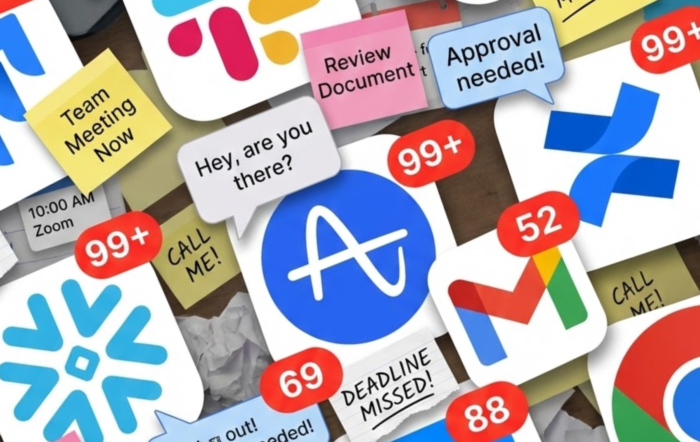
Product teams are surrounded by data. The real challenge is accessing the right context at the moment a decision is made.
Over the past decade, dashboards became the default way to deliver insight. Analytics tools promised self-serve clarity, faster decisions, and alignment across teams. As organizations scaled, those dashboards multiplied. Many still exist today, technically correct and fully populated, yet rarely used.
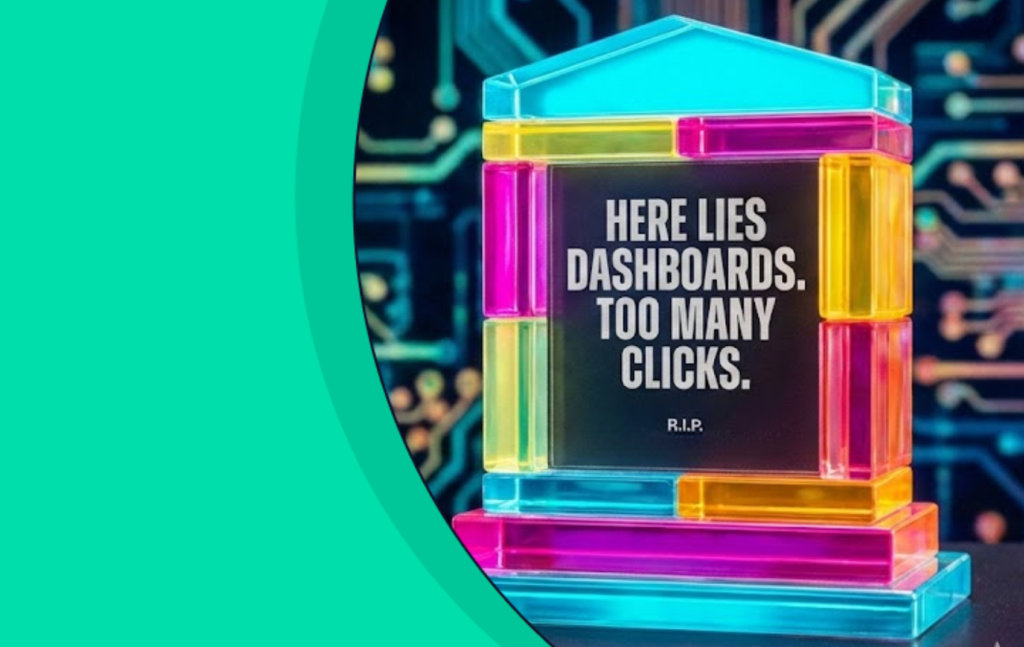
This pattern has become known as the dashboard graveyard.
Recent analysis of dashboard fatigue describes companies with thousands of dashboards, most of which see little to no ongoing use. Leaders increasingly push back on the expectation that insight requires extra steps, exploration time, and interpretation outside their daily work. Over time, dashboards shift from decision support to background infrastructure.
The issue is not intent or effort. It is how insight is delivered.
TL;DR FAQ
The dashboard graveyard refers to analytics dashboards that technically exist but are rarely used in real product decisions. This typically happens when dashboards live outside daily workflows and require product teams to stop their work, search for context, and manually interpret data before acting.
Over time, these dashboards lose influence, even if the data itself remains accurate.
As product teams scale, decisions involve more signals across product, customer, and go-to-market systems. When insight is fragmented across tools, dashboards become another destination to manage rather than a source of timely context.
Product teams prioritize information that appears where decisions are already happening. Insight that requires extra navigation is often bypassed under time pressure.
Workflow-native product intelligence means delivering customer context, product signals, and business impact directly inside tools like Jira, Slack, Salesforce, and support systems.
Instead of asking teams to visit a separate analytics destination, intelligence appears alongside the work itself, supporting decisions as they happen.
By embedding insight into existing tools, workflow-native intelligence removes the need to jump between systems to reconstruct context. Product teams can see relevant evidence, history, and impact without leaving the ticket, thread, or opportunity they are working on.
This reduces cognitive load and helps teams maintain focus while making decisions.
Product decisions are often made in motion, during planning sessions, customer conversations, or delivery discussions. Insight that arrives after the decision has already been discussed has limited impact.
Workflow-native intelligence prioritizes timing by surfacing relevant context at the moment a decision is being formed, not after the fact.
Roadmap confidence improves when decisions are made with shared, visible evidence. When customer signals, delivery status, and commercial context are accessible at prioritization time, teams can explain their choices clearly and consistently.
This reduces reliance on retrospective justification and minimizes alignment friction across product and GTM teams.
Traditional product analytics focuses on analyzing historical data in standalone tools. Workflow-native product intelligence focuses on decision support by delivering relevant signals in context.
The difference is not the type of data, but how and when it is presented to the team.
Modern product management emphasizes faster learning cycles, outcome accountability, and continuous iteration. These practices depend on timely access to context across functions.
Workflow-native intelligence supports these trends by keeping insight close to the work, rather than isolating it in periodic reports or dashboards.
This approach is especially valuable for:
-Product Managers prioritizing work under uncertainty
-Product Operations teams scaling decision framework
-Go-to-market teams needing product context during customer interactions
-Leadership teams seeking alignment without additional reporting layers
Bagel AI is designed around the principles described here. It connects product, customer, and go-to-market signals and delivers relevant insights inside the tools teams already use.
By keeping product intelligence embedded in daily workflows, Bagel helps teams reduce coordination overhead and make decisions with clearer context.
Because workflow-native intelligence structures context consistently and ties it to real decisions, it is easier for AI systems to retrieve accurate, relevant answers. This benefits both human decision-makers and AI-powered search and assistant experiences.
How Dashboards Drift Out of Daily Work
Dashboards are built on a simple assumption: insight consumption is a distinct activity. Someone pauses their work, opens a reporting tool, finds the right view, interprets the data, and carries that understanding back into a planning session or conversation.
Product work rarely follows that pattern.
Decisions happen inside Jira tickets, Slack threads, customer calls, support queues, and revenue conversations. When insight lives elsewhere, it often arrives after the decision has already been made.
Academic research on information overload and dashboard fatigue highlights how real-time dashboards can overwhelm teams when timing, relevance, and context are misaligned. Instead of supporting clarity, they introduce competing signals that slow action and reduce confidence.
As this gap widens, teams rely more heavily on intuition, partial memory, or second-hand summaries. Dashboards remain available, but their influence on outcomes fades.
Context Switching and the Product Workflow
As product stacks expand, the effort required to maintain context increases.
Product School’s overview of product management trends shaping 2026 emphasizes faster learning cycles, outcome accountability, and AI-enabled workflows. These trends raise the importance of continuous context. Product teams are expected to learn, adapt, and decide quickly, often across multiple functions and signals.
Harvard Business Review’s 2024 research on digital overload and urgency-driven knowledge work shows how constant switching and reactive workflows reduce decision quality. Each interruption carries a recovery cost, even when the task seems small.
For product teams, this shows up as longer planning cycles, more clarification meetings, and repeated requests for the same information. Dashboards add another surface to manage, rather than reducing the overall load.
Where Insight Actually Gets Used
Teams tend to act on information that appears where work is already happening.
Atlassian’s 2024 research on work about work describes how much time teams spend navigating tools, updating status, and coordinating across systems. Much of this effort exists to compensate for missing or delayed context.
This helps explain why many teams look for ways to route insight directly into operational tools. When context appears inside the ticket, the thread, or the deal, it becomes part of the decision rather than a separate lookup.
Salesforce’s overview of native AI in Slack reflects this shift. Intelligence shows up inside conversations, search results, and workflows, supporting decisions as they unfold. Insight becomes situational and timely, rather than retrospective.
A broader view of product and design tools that integrate with Slack and Teams shows similar momentum across the ecosystem. Teams want updates, signals, and evidence to flow into the spaces where coordination already happens.
Gartner’s perspective on Strategic Technology Trends for 2025 reinforces this direction, highlighting Everyday AI as systems that operate continuously within existing workflows.
How Insight Delivery Affects Product Decisions
| Aspect | Destination Dashboards | Workflow-Native Delivery |
|---|---|---|
| Where insight appears | Separate analytics tools | Jira, Slack, Salesforce |
| Timing | After manual lookup | During decision making |
| Ongoing usage | Gradual decline | Sustained through habit |
| Cognitive effort | High | Lower |
| Decision influence | Indirect | Immediate |
Product Intelligence as a Continuous Input
Modern product teams increasingly treat intelligence as a continuous input rather than a periodic report.
Product Coalition’s 2025 discussion of AI-driven product market intelligence describes how teams move from collecting data to shaping decisions across discovery, prioritization, and go-to-market planning. The emphasis is on shortening the distance between signal and action.
This approach extends beyond product planning. Salespanel’s overview of product-led growth trends in 2025 describes embedded assistants and intelligence that support both product and GTM workflows, helping teams respond to signals as they emerge.
MarketsandMarkets frames competitive intelligence in sales technology as an operational discipline, where product usage data informs positioning, timing, and commercial decisions.
The growing size of the PM stack makes this shift more urgent. Product School’s overview of product management tools for 2025 illustrates how many systems product teams already juggle. Each additional destination increases the cost of maintaining shared context.
Operational Effects of Embedded Product Intelligence
| Area | Observable effect |
|---|---|
| Prioritization | Evidence available at decision time |
| Feedback handling | Less manual triage |
| GTM alignment | Context visible in daily tools |
| Roadmap discussions | Clearer rationale |
| Meetings | Fewer status-focused sessions |
Roadmap Confidence and Ongoing Alignment
Roadmap confidence depends on access to evidence when choices are made. When teams can see customer signals, delivery status, and commercial context in one place, decisions require less reconstruction and explanation.
As product organizations adopt faster learning cycles and tighter GTM coordination, intelligence that stays embedded in the workflow supports consistency without additional process. Context remains close to the work, and alignment emerges through visibility rather than synchronization.
| Decision dimension | Destination-based intelligence (dashboards) | Workflow-native intelligence (Bagel AI) |
|---|---|---|
| Where decisions are formed | Outside the analytics tool, after data review | Inside the system where the decision is being made |
| How context is assembled | Manually reconstructed across tools | Automatically present alongside the work |
| Cognitive cost | High: switching, remembering, translating | Lower: context is already attached |
| Default behavior under time pressure | Decide with partial information | Decide with visible evidence |
| What happens as teams scale | Context fragments and alignment degrades | Context remains shared across roles |
| How often evidence is used | Intermittently, usually during reviews | Continuously, during day-to-day execution |
| Roadmap discussions | Require explanation and backfill | Reference existing, shared context |
| Product–GTM alignment | Relies on meetings and follow-ups | Maintained through ongoing visibility |
| Failure mode | Dashboards exist but stop influencing decisions | Intelligence becomes part of normal work |
| Organizational outcome | Decisions drift toward intuition | Decisions stay anchored to evidence |
Conclusion
As product work becomes more continuous, collaborative, and AI-supported, insight that lives outside daily workflows loses relevance. Teams respond to information that appears in context, at the moment it matters.
Product intelligence that flows through existing tools supports clearer decisions, steadier alignment, and less overhead. Over time, this changes how teams plan, communicate, and execute.